California
California reports strongest electric vehicle sales of the year as new rebate program prepares to launch statewide

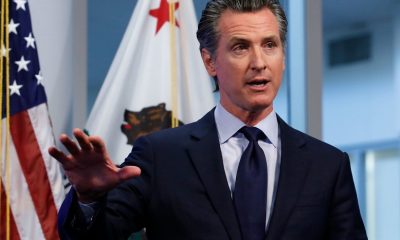
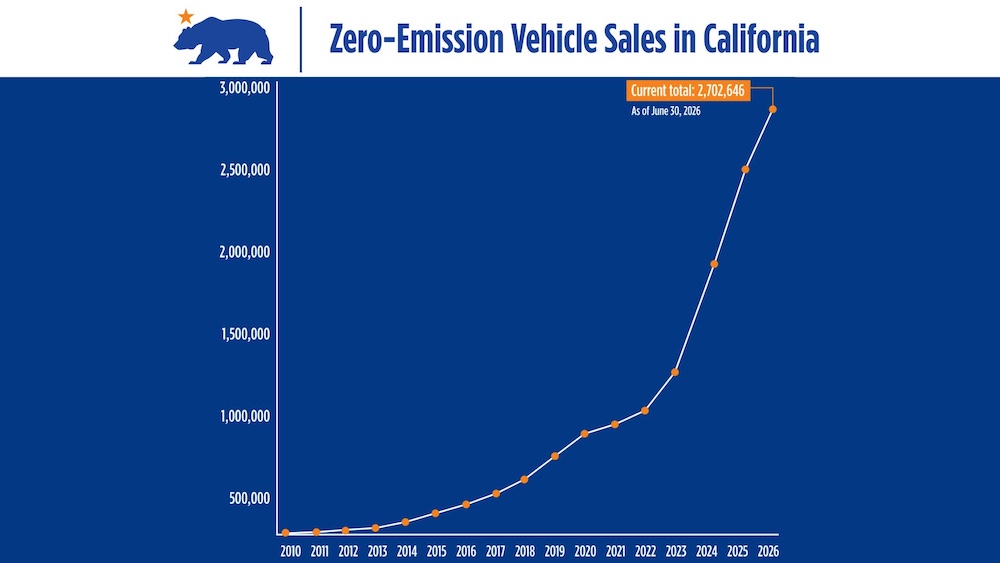
Sacramento, California – California reached another milestone in its push toward cleaner transportation after recording its strongest quarterly performance for zero-emission vehicle sales this year. Governor Gavin Newsom announced that 86,857 new zero-emission vehicles (ZEVs) were purchased across the state during the second quarter of 2026, accounting for 19.1% of all new vehicle sales during the period.
State leaders said the latest figures show California continues to lead the nation in electric vehicle adoption while expanding consumer choices and investing in cleaner transportation infrastructure.
Newsom also used the announcement to criticize President Donald Trump’s energy policies, arguing that California is providing residents with an alternative to rising fuel prices by encouraging the transition to electric vehicles.
According to the governor, “While Donald Trump makes Americans pay the bill for his Iran war at the pump, California is giving families the freedom to choose a cheaper way forward by going electric. California’s MyFirstEV instant rebate program is going to put thousands more Californians behind the wheel of a car that can’t be held hostage by greedy oil companies or foreign wars. We built the largest electric car market in America, and we’re not stopping now.”
New rebate program begins later this summer
State officials said additional momentum is expected next month when California officially launches the MyFirstEV instant rebate program, which was approved by the Legislature and signed into law by Governor Newsom.
The initiative is designed to make purchasing an electric vehicle more affordable for first-time buyers. Under the program, 13 participating automakers will provide instant rebates at participating dealerships.
California has committed $135.5 million toward the effort, while participating manufacturers will match that funding dollar for dollar. Together, the investment will provide approximately $271 million in savings for eligible California families.
The rebate program will offer:
- $3,500 toward the purchase of a new electric vehicle with a manufacturer’s suggested retail price of up to $50,000.
- $1,750 toward the purchase of an eligible used electric vehicle priced at up to $25,000 through participating manufacturers’ certified pre-owned programs.
The rebates are available only to Californians purchasing their first zero-emission vehicle.
The California Air Resources Board (CARB) will oversee the program, with additional information about funding availability and participation expected to be released next month.
California residents will also be able to research available vehicles, charging options, and participating dealerships through the state’s electric vehicle information website.
California Energy Commissioner Nancy Skinner encouraged residents considering an electric vehicle to explore the new incentives.
“This is an exciting time for prospective EV buyers in California,” Skinner said. “There are many affordable new and used EV models available, and the MyFirstEV program will give thousands of Californians the chance to ditch their increasingly expensive gas vehicles. As California continues to rapidly build out a reliable and publicly available fast charging network, there has never been a better time to go electric.”
California Air Resources Board Chair Lauren Sanchez also pointed to growing consumer interest in electric vehicles.
“Nearly 1 in 5 Californians are choosing to go electric because EVs are fun to drive, fast, and cheaper to fuel and maintain,” Sanchez said. “With the state’s new MyFirstEV program, we’re making it easier for first-time buyers to make the switch. As federal actions threaten decades of progress, California is committed to protecting public health and delivering cleaner air across the state.”
State continues investing in clean transportation
California officials said the state’s commitment extends beyond consumer rebates.
Earlier this year, California surpassed 2.5 million cumulative zero-emission vehicle sales, exceeding its original target of 1.5 million ZEVs by 2025.
The state has also continued investing in other clean transportation projects. In May, Governor Newsom announced a $1 billion rebate program for electric medium- and heavy-duty trucks. Before that, in April 2025, California committed $500 million to purchase 1,000 clean school buses across the state.
Last September, San Bernardino County also became home to North America’s first hydrogen-powered passenger train operating in regular service, another milestone in California’s effort to expand cleaner transportation options.
Infrastructure investments have continued as well. Through the latest Clean Transportation Program Investment Plan Update, the California Energy Commission allocated $98.5 million for light-duty zero-emission vehicle charging infrastructure during the 2025-2026 fiscal year. Much of that funding will support Level 1 and Level 2 charging stations, particularly at apartment buildings and other locations where vehicles remain parked for longer periods.
Officials also highlighted Governor Newsom’s Build More, Faster — For All infrastructure agenda, which has supported transportation improvements across the state. More than 29,000 infrastructure projects are currently being tracked through the statewide program.
California’s charging network has also continued to grow. State officials said there are now more than 200,000 public and shared EV charging plugs available throughout California. Chargers can be found at grocery stores, workplaces, apartment complexes, park-and-ride facilities, medical offices, sports venues, gas stations, and many other locations. In addition, officials estimate there are approximately 800,000 electric vehicle chargers installed at homes across the state, giving drivers even more options for keeping their vehicles charged.
State leaders say the combination of financial incentives, expanding charging infrastructure, and continued investment is intended to keep California at the forefront of the nation’s transition toward cleaner transportation while giving consumers more affordable alternatives to gasoline-powered vehicles.